



Stay in Touch
Get sneak previews of special offers & upcoming events delivered to your inbox.

Sign in
 Blogs & Forums
 Forums
 Blogs
Blogs

06-24-2024 01:16 PM
@CrazyDaisy wrote:
@NYCLatinaMe wrote:
@sunshine 919 wrote:
@bonnielu wrote:Friends of ours, three couples charge outside in driveway.
As for me not interested in an electric car. Not enough space to list problems they have had with these cars.I have no interest in them either. I am curious though. Does their electric bill go up? Do they pay at these charging stations? Yikes I just cannot see having one of these cars.
It is hard to compare gas and electric power costs in EVs because there is so much variation on electricity and gas prices across the nation.
But it has been estimated that, on average, an average EV costs about 5 cents per mile to charge and run, and an average gas-powered car costs just under 15 cents per mile to run.
These estimates are based on the U.S. Energy Information Administration’s (EIA) average cost of electricity in the U.S. during the first 11 months of 2023 of 16 cents per kilowatt-hour (kWh), and the Electric Vehicle Database that shows the average electric car consumes 0.195 kWh/km, or just over 0.31 kWh per mile. Using this information, it is estimated that a standard electric car costs just under 5 cents per mile to charge at home.
The national average price per gallon of gas in the U.S. in 2023 was about $3.52. The average gas-powered car offers approximately 24 miles per gallon. Using these figures, we can estimate a gas-powered car's average fuel cost at just under 15 cents per mile.
Insurance, maintenance and registration costs are much higher for EV vehicles. Tires wear out 20% faster. They weigh 30% more causing additional wear and tear on the infrastructure. As a result many states are imposing additional taxes to cover the lack of taxes on gasoline (the major component of gasoline prices). Compare insurance and repair costs, bottom line EV is not cheaper in the long run.
@CrazyDaisy I don't know about these financial costs. I take public transportation. But I am sure costs will go down as electric vehicles become more common. Computers now cost a fraction of what they cost in their early years, and are far smaller lightweight, and better.
Cell phones also weigh a lot less now than at the beginning, and are an incredible value, considering they are a whole entertainment center in one's pocket.
I am most concerned about emissions and the danger to health and the environment. Sometimes I feel I can barely breath.
06-24-2024 01:22 PM
@Isobel Archer wrote:Sorry if I am slow here, but I do not understand the push for everone to buy an EV BEFORE we are remotely equipped to charge them adequately.
And then we apparently have provided a $7.5 billion investment in charging stations that has netted 7 in 4 states (for a total of 38 charging spots) in two years according to the Washington Post. And the response to questions is that "it takes time."
OK, but if it's taking that long, why the insistence that everyone buy an EV NOW?
And then I also read that new multi family construction is now limiting parking - also apparently to "help save the environment"
@Isobel Archer We invest in innovation so that there is progress. Remember what it was like when we had no computers? We had to search manuallly in (and read) hundreds of paper sources to write a paper for school. And it has only been about 30 years since computers became widely available.
06-24-2024 01:46 PM
@They CallMe MRWILKES wrote:There are concerns that the parking garage collapse in NYC last year and structural concerns in other garages (after inspections) are due in part to the additional weight of electric vehicles.
These structures, many decades and decades old, were not engineered to support the weight.
It's a complete infrastructure issue that would need to be addressed.
Are you referring to the April 2023 collapse of the Ann Street structure? That structure was built in 1925 and converted to a garage in the 1950s.
In April 2024 the New York City Department of Buildings said the collapse was not due to the structure carrying a heavier weight than it was designed for.
The condition of the structure was the problem. At the time of the collapse, the building had open violations for for loose and missing concrete and slab cracks.
Poorly maintained buildings that are not parking garages collapse too.
06-24-2024 01:57 PM
@willdob3 wrote:In the past week, I've heard multiple reports regarding the danger to one's health from simply sitting in an EV. Forget all the other negatives connected to them. This alone is concerning enough.
@willdob3 We are suffering the dangers of gas power vehicles in and out of our homes, all the time. The emissions from gasoline powered vehicles are known to cause respiratory, cardiovascular and other illnesses. And they are destroying the Earth's atmosphere. I am very concerned about that. Maybe you can share what is the danger to a person's health from sitting in an EV.
06-24-2024 01:58 PM
@bikerbabe wrote:
I can’t speak to a true EV, but I saw reports that a study of EMF emissions in the cabin showed a gas-powered Chevy registered more than a Prius hybrid. 🤪
@bikerbabe True EVs have ZERO emissions.
06-24-2024 04:22 PM
@NYCLatinaMe you are a big ev advocate talking health and other types of things read several posts of yours here and haven't seen china or india mentioned and it is global why might that be since you say you "can hardly breathe"
mrshckynut
06-24-2024 05:25 PM
06-24-2024 05:52 PM
@NYCLatinaMe wrote:
@gardenman wrote:
@bikerbabe wrote:
The irony is that the risk of vehicle fire is significantly higher in gasoline engines. Google some data.
Granted, an EV fire can be difficult to put out.The big difference is when they catch fire. By and large a parked gasoline-powered car that's turned off, won't catch fire. Gasoline-related car fires tend to occur when the car is running and the fuel pump is pumping gas. There's a leak in the fuel line and the gas hits something hot and ignites. Electric cars are more inclined to catch fire while parked and charging.
If you're charging an EV in a home garage, it's often unattended. In general, you know right away if you're driving a gasoline-powered car and it catches fire. Park your EV and walk away and it could be on fire and you don't know it until the damage is done. And the damage can be substantial if the fire occurs in a home garage.
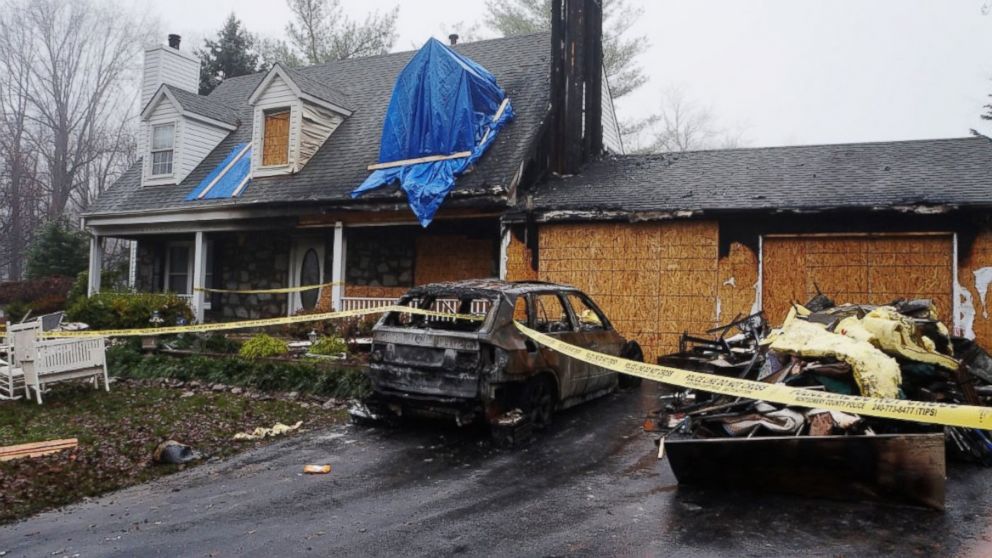
Hi @gardenman -- Parked gas powered vehicles catch fire all the time. Even when they haven't been driven for hours or days. That happened to my sister. Her car was in the driveway and burned the side of her house in the morning. This is not her house, but is the aftermath of a fire of a parked car.
I still think EVs pose serious issues. The amount of water used just to put out an EV fire is enormous. And EV fires often start up again after the initial fire. They burn very, very hot, much moreso than a gasoline fire. So they are more dangerous when they take place.
06-24-2024 06:12 PM
@mrshckynut wrote:@NYCLatinaMe you are a big ev advocate talking health and other types of things read several posts of yours here and haven't seen china or india mentioned and it is global why might that be since you say you "can hardly breathe"
mrshckynut
@mrshckynut Not sure what you mean. I have respiratory problems, and car exhaust is terrible for that. Also for heart disease, which took my father's life.
06-24-2024 06:45 PM
Kind of OT, but it pertains to electric vehicles:
Starting in 2025, Vermont will charge EV owners an extra $89 fee; $44 for hybrids. The state is doing this to make up for the gasoline revenues owners don't pay. I imagine other states will soon follow.
Maybe it's still some savings compared to gas vehicles, but this is something people need to be aware of. In my state of IN, EVs and hybrid owners have to pay an extra $100 or so when they get their annual licenses or tags. The states will do anything to make up for the loss of gas taxes.



Get sneak previews of special offers & upcoming events delivered to your inbox.
*You're signing up to receive QVC promotional email.

Find recent orders, do a return or exchange, create a Wish List & more.





Privacy StatementGeneral Terms of Use
QVC is not responsible for the availability, content, security, policies, or practices of the above referenced third-party linked sites nor liable for statements, claims, opinions, or representations contained therein. QVC's Privacy Statement does not apply to these third-party web sites.
© 1995-2026 QVC, Inc. All rights reserved. | QVC, Q and the Q logo are registered service marks of ER Marks, Inc. 888-345-5788
