

Stay in Touch
Get sneak previews of special offers & upcoming events delivered to your inbox.

Sign in
 Blogs & Forums
 Forums
 Blogs
Blogs

12-29-2020 07:52 AM
Please consider this message with great seriousness. For anyone who has had breast implant surgery, whether for breast cancer or cosmetic purposes, there is a genuine danger for anyone who has the Allergan textured implant used since 2001. I am a 2 time breast cancer patient, 2006 and 2016. There have since been several deaths. I had an implant placed in 2015 by a well known, highly regarded plastic surgeon in NYC using this implant, knowing there were ongoing studies which linked them a T cell lymphoma in the breast but doctors continued to use them until they were pulled by fhem by FDA in 2018. There were symptoms to watch for, including a build up of fluid, but I was asymptomatic until a sonogram revealed fluid around the implant. I had a needle biopsy and it was ok, but my breast surgeon said the implant must be removed ASAP. Plastic surgeons were mandated to advise their patients if they have this type of implant but they have not. Please find your implant card and Google the serial number. These implants are a ticking time bomb because if you are ok now, that does not mean you will be in the future. And please spread the word to any friends and family who have this Allergan implant. You may save a life.
12-29-2020 08:32 AM
Thank you for sharing. I too have faced breast cancer twice, 2006 and 2013. You may already know this, but I wanted to share breastcancer.org. They have discussion boards, and one specifically for reconstruction. You may find women who have already experienced what you face. The support offered by women all over the world is so encouraging.
I am sorry after all you have been through that you now face this. I will pray for you to have the best possible outcome.
12-29-2020 10:45 AM
@Barkanyc Wow, you've really been through it, haven't you. I wish you good health moving forward. I also thank you for stepping up to support and advocate for other women who have, or may be affected, by the Allergan implants. This is important information to know and pass on. Best to you for 2021 and beyond.
12-29-2020 01:19 PM
@Barkanyc I truly applaud you. The service you have done, by exposing an issue that has been ignored by doctors, is an act of courage. Perhaps some doctors are ignorant of your facts, and as such they should not be in practice. That level of ignorance removes them from any list of competent surgeons. I am so very sorry for what you have endured, and I am thrilled that you discovered this in time to do something about it. May God be with you.
12-29-2020 03:45 PM - edited 12-29-2020 03:48 PM
Q1. What does the FDA know about Breast Implant Associated Lymphoma?
A1. The FDA first identified a possible association between breast implants and the development of ALCL in 2011. At that time, the FDA knew of so few cases of this disease that it was not possible to determine what factors increased the risk. In a report summarizing the Agency's findings, we emphasized the need to gather additional information to better characterize ALCL in individuals with breast implants. In 2016, the World Health OrganizationExternal Link Disclaimer designated breast implant-associated anaplastic large cell lymphoma (BIA-ALCL) as a T-cell lymphoma that can develop following breast implants and noted that the exact number of cases remained difficult to determine due to significant limitations in world-wide reporting and lack of global breast implant sales data.
Since that time, the FDA has undertaken several steps to better understand this issue, including an in-depth review of post-approval study data, medical device reports, scientific literature and breast implant-specific registries, and public discussions. We have regularly communicated about the risks associated with breast implants and heard from patients who are concerned about their implants being connected to various health conditions. In March 2019, we discussed many important breast implants concerns in a public advisory committee meeting.
Q2. What is BIA-ALCL? Is BIA-ALCL breast cancer?
A2. Breast Implant Associated Lymphoma (BIA-ALCL) is not breast cancer - it is a type of non-Hodgkin's lymphoma (cancer of the immune system). In most cases, BIA-ALCL is found in the scar tissue and fluid near the implant, but in some cases, it can spread throughout the body. An individual's risk of developing BIA-ALCL is considered to be low; however, this cancer is serious and can lead to death, especially if not treated promptly. In most patients, it is treated successfully with surgery to remove the implant and surrounding scar tissue, and in some patients, also treatment with chemotherapy and radiation therapy.
Q3. What are the symptoms of BIA-ALCL?
A3. The main symptoms of BIA-ALCL are persistent swelling, presence of a mass or pain in the area of the breast implant. These symptoms may occur well after the surgical incision has healed, often years after implant placement.
Upon evaluation by a health care provider, evidence of fluid collection around the breast implant (seroma) is often observed. Some patient reports indicated that a lump under the skin or capsular contracture (thick and noticeable scar capsule around the implant) were present.
Q4. Where in the breast has BIA-ALCL been found?
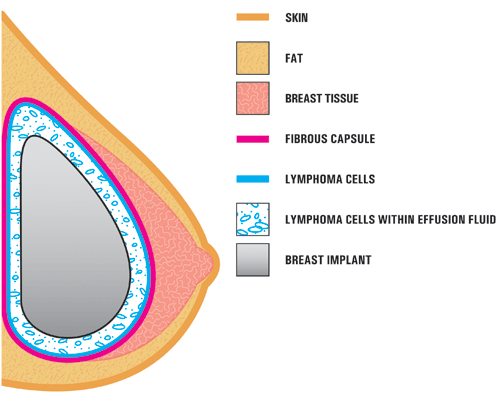
A4. In the case studies reported in the literature, BIA-ALCL is usually found near the breast implant, contained within the fibrous scar capsule, and not in the breast tissue itself. The illustration below shows the location of the ALCL in these reports. In most cases, the ALCL cells were found in the fluid surrounding the implant (seroma) or contained within the fibrous scar capsule. [Modified from Thompson et al, 2010External Link Disclaimer]
Q5. Does the surface texture of the breast implant shell–smooth versus textured–increase a woman's risk of developing BIA-ALCL?
A5. We have evaluated the growing body of evidence, including new medical device reports from the U.S. and around the world on the overall number of BIA-ALCL cases. These include additional deaths only recently reported to the FDA and in the scientific literature. As a result, we have determined that:
Q6. Could certain textured tissue expanders increase the risk of BIA-ALCL?
A6. The FDA believes tissue expanders with a certain textured surface may be of concern. These tissue expanders should not be used and we have issued new recommendations for patients who have or have had these products. Tissue expanders are indicated to be used for only 6 months, and to date, there is limited information on whether temporary exposure may be associated with the risk of BIA-ALCL. Other tissue expanders that do not use the textured surface of concern are readily available in the U.S. A tissue expander is used stretch skin and other tissues before breast reconstruction after mastectomy, correction of an underdeveloped breast, scar revision, and tissue defect procedures. It is a temporary implant, placed under the breast skin or muscles of the chest to stretch skin and other tissues, and is intended to be replaced with a breast implant at a later time.
Q7. Does the fill of the breast implant–silicone versus saline–increase an individual's risk of developing BIA-ALCL?
A7. Based on the currently available data, the type of implant fill does not appear to be a risk factor for BIA-ALCL, but this has not been evaluated in a large, well-designed, epidemiologic study. To date, there has not been sufficient data to determine whether ALCL may be found more or less frequently in individuals with silicone-filled breast implants compared to individuals with saline-filled breast implants.
Q8. What should health care professionals and patients do?
A8.The FDA is recommending that health care providers continue to provide their patients routine care and support.
Health Care Professionals:
Patients:
We will continue to report on significant findings as new information and analyses become available.
Q9. How can health care professionals report cases of BIA-ALCL in their patients?
A9. Health care professionals should:
Q10. If an individual is considering breast implants, what should they do?
A10. There are several important things to consider before deciding to undergo breast implant surgery. This list is available from the FDA at (revised Things to Consider Before Getting Breast Implants in Risks and Complications) to help you be fully informed if you are considering breast augmentation, reconstruction with an implant, or revision (replacement) of an implant you already have. Most importantly, you and your surgeon should discuss your goals and expectations about having breast implants, the benefits and risks, the need to monitor your implant for complications for as long as you have them, and eventual removal or replacement.
Q11. What actions will the FDA continue to take?
A11. The FDA continues to collect and evaluate information about BIA-ALCL in individuals with breast implants and who have used tissue expanders.
On an ongoing basis, we:
Q12. What actions have been taken by Professional Societies and Regulatory bodies outside the US?
A12. The World Health OrganizationExternal Link Disclaimer recognized breast implant-associated anaplastic large cell lymphoma (BIA-ALCL) as a unique form of ALCL that can develop following breast implant, implantation.
Professional organizations, including the Plastic Surgery FoundationExternal Link Disclaimer and the National Comprehensive Cancer Network (NCCN) published information to help physicians understand the disease and provide diagnosis and treatment.
On February 12, 2019 Health Canada announcedExternal Link Disclaimer it will be updating its safety review of breast implants.
On April 4, 2019, the Medicines and Healthcare products Regulatory Agency announcedExternal Link Disclaimer its recommendations for patients and health care providers.
On April 4, 2019, the French National Agency for Medicines and Health Products Safety (ANSM) announcedExternal Link Disclaimer its decision to, as a precautionary measure, withdraw from "macrotextured" breast implants and breast implants with polyurethane-coated surfaces marketed in France. The ANSM does not recommend preventative explanation for women with these implants
On July 11, 2019 The Australian Therapeutic Goods Administration (TGA) reported announcedExternal Link Disclaimer it has completed assessment of textured breast implants available in Australia or exported from Australia and proposed regulatory actions.
Q13. Where can we find more information?
A13. Additional information can be found in FDA's recent communications and our breast implant webpage.
12-29-2020 03:50 PM - edited 12-29-2020 03:52 PM
The U.S. Food and Drug Administration today took significant action to protect women from breast implant-associated anaplastic large cell lymphoma (BIA-ALCL) by requesting that ✅Allergan, the manufacturer of a specific type of textured implant, ✅recall specific models of its textured breast implants from the U.S. market due to the risk of BIA-ALCL. Following the agency’s request, Allergan has notified the FDA that it is moving forward with a worldwide recall of their BIOCELL textured breast implant products, including: Natrelle Saline-Filled breast implants, Natrelle Silicone-Filled breast implants, Natrelle Inspira Silicone-Filled breast implants, and Natrelle 410 Highly Cohesive Anatomically Shaped Silicone-Filled breast implants. The recall also includes tissue expanders used by patients prior to breast augmentation or reconstruction, including Natrelle 133 Plus Tissue Expander and Natrelle 133 Tissue Expander with Suture Tabs. The recall helps ensure that unused products are removed from suppliers and doctors’ offices. The agency also issued a safety communication today for patients with breast implants, patients considering breast implants and their health care professionals outlining the known risks and what steps patients should consider when monitoring for symptoms of BIA-ALCL, including swelling and pain in their breasts. The safety communication also lists information about all models and style numbers included in the recall.
“Although the overall incidence of BIA-ALCL appears to be relatively low, once the evidence indicated that a specific manufacturer’s product appeared to be directly linked to significant patient harm, including death, the FDA took action to alert the firm to new evidence indicating a recall is warranted to protect women’s health,” said FDA Principal Deputy Commissioner Amy Abernethy, M.D., Ph.D. “The FDA has been diligently monitoring this issue since we first identified the possible association between breast implants and ALCL in 2011 and, at that time, communicated to patients and providers that there is a risk for women with breast implants, more frequently occurring in women with textured implants, for developing this disease. Since that time, we have worked to increase awareness and encourage reporting of all cases to the FDA so that we could continue to monitor this potential safety signal. As this issue and the science have continued to develop, we have been monitoring the reports in databases, including external patient registries, and in scientific literature. Based on new data, our team concluded that action is necessary at this time to protect the public health. We will continue to monitor the incidence of BIA-ALCL across other textured and smooth breast implants and tissue expanders as well as other devices intended for use in the breast. If action is needed in the future, we will not hesitate to do what is necessary to protect patients.”
In a table updated today on the agency’s BIA-ALCL webpage, the FDA provides the new total of 573 unique cases globally of BIA-ALCL and 33 patient deaths, which reflect a significant increase in known cases of BIA-ALCL since the agency’s last update earlier this year —an increase of 116 new unique cases and 24 deaths. Specifically, of the 573 unique cases of BIA-ALCL, 481 are attributed to Allergan implants. Of the 33 patient deaths the FDA is reporting today, 12 of the 13 patients for which the manufacturer of the implant is known, are confirmed to have an Allergan breast implant at the time of their BIA-ALCL diagnosis. These cases include new data reported to the agency since the public advisory committee meeting in March. Based on the currently available information, including the newly submitted data, our analysis demonstrates that the risk of BIA-ALCL with Allergan BIOCELL textured implants is approximately six times the risk of BIA-ALCL with textured implants from other manufacturers marketing in the U.S.
The table on the FDA’s website summarizes the cases, along with a breakdown of important information such as breast implant surface texture, patient’s age at diagnosis, time from last implant to diagnosis, and other details to give patients and health care professionals the most complete information possible about the known factors impacting these unique cases and deaths. The FDA is continuing to evaluate these additional case reports and will make this information available on its database of adverse event reports within the next few weeks.
The FDA has taken multiple steps to better understand the safety and risks of breast implants and to help strengthen the evidence generated to help inform its regulatory actions in this area, including sharing updates with the public (as recently as February 2019 and via a public advisory committee meeting in March) and encouraging patients and health care professionals to report adverse events to the agency. This voluntary recall is a direct result of the agency’s comprehensive efforts to improve the quality of data collected and analyzed, and the FDA’s ongoing work to evaluate all available safety information.
“We understand that today’s news may be alarming to some patients with breast implants. In the safety communication issued today, we’re providing actionable information for individuals with specific breast implants and their health care professionals. The FDA does not recommend removal for patients without symptoms due to potential risks, but we provide helpful information for patients and providers to consider when discussing next steps,” said Jeff Shuren, M.D., J.D., director of the FDA’s Center for Devices and Radiological Health. “Moving forward, we are committed to continuing to share updates with patients about this issue. We will continually evaluate any new information and may, as a result, take action regarding other breast implants, if warranted. In addition, we are continuing our assessment to determine whether the risk of developing BIA-ALCL is limited to specific models of textured, or all textured breast implants. We continue to advise women and health care professionals that the use of breast implants is associated with a risk of developing BIA-ALCL and that the risk is greater with textured implants.”
Textured breast implants overall are less common in the U.S. compared to other countries and specifically, macro-textured implants (the type of textured implant that Allergan manufactures) represent less than 5% of all breast implants sold in the U.S. Although this type of textured breast implant may represent a small proportion of the U.S. market, the continued availability of Allergan BIOCELL textured breast implants pose a public health risk to patients. Today’s action by the FDA is similar to other actions initiated by France, Canada and Australia, where the use of textured implants is much higher, sometimes as high as 80% of their market share. These countries have also initiated or taken actions to prompt the recall or removal of certain textured breast implants (including certain breast implants sold by Allergan) from the market.
In addition to the voluntary recall announced today, the FDA is initiating other actions to ensure that all women who consider breast implants have the information they need to have thoughtful and balanced discussions with their health care professional on the benefits and risks of breast implants based on clear information reflecting the most current understanding of their safety. For example, as previously discussed, the agency is considering recommendations for changes to the labeling of breast implants, which could include a boxed warning and a patient decision checklist to help women consider the benefits and risks of breast implants.
The FDA will continue to focus on gathering available evidence to help inform future regulatory actions and assure that women and health care professionals are informed of the risk of BIA-ALCL as they consider breast implants. To this end, the agency has requested that all breast implant manufacturers provide quarterly trending analyses of adverse events, including BIA-ALCL, and require reporting individual events in the adverse event database for devices and in existing registries. The FDA will continue to analyze all available information regarding risks associated with breast implants, routinely update the BIA-ALCL analysis published on our website and take additional actions when and where necessary.
The FDA is committed to protecting the health of women and providing as much information as possible to ensure they and their health care professionals know the benefits and risks of these devices, and that women have the most complete information available to make these important decisions about their health care.
Link to FDA Recall
###
12-29-2020 03:54 PM - edited 12-29-2020 03:55 PM
When a company announces a recall, market withdrawal, or safety alert, the FDA posts the company's announcement as a public service. FDA does not endorse either the product or the company.
-- Global Action Follows Notification of Updated Safety Information from the U.S. Food and Drug Administration (FDA) --
-- FDA Does Not Recommend Removal or Replacement of Textured Breast Implants in Asymptomatic Patients --
--Smooth and MICROCELL®Breast Implants and Tissue Expanders Not Impacted --
DUBLIN, July 24, 2019/PRNewswire/ --Allergan plc (NYSE: AGN) today announced a voluntary worldwide recall of BIOCELL®textured breast implants and tissue expanders. Allergan is taking this action as a precaution following notification of recently updated global safety information concerning the uncommon incidence of breast implant-associated anaplastic large cell lymphoma (BIA-ALCL) provided by the U.S. Food and Drug Administration (FDA).
BIOCELL®saline-filled and silicone-filled textured breast implants and tissue expanders will no longer be distributed or sold in any market where they are currently available. Effective immediately, healthcare providers should no longer implant new BIOCELL® textured breast implants and tissue expanders and unused products should be returned to Allergan. Allergan will provide additional information to customers about how to return unused products.
Patient safety is a priority for Allergan. Patients are advised to speak with their plastic surgeon about the risks and benefits of their implant type should they have any concerns.
Importantly, the FDA and other health authorities have not recommended removal or replacement of textured breast implants or tissue expanders in asymptomatic patients.
This global recall does not affect Allergan's NATRELLE® smooth or MICROCELL® breast implants and tissue expanders.
The recalled products include:
Natrelle Saline breast implant styles 168, 363, 468 |
| Natrelle and McGhan 410 breast implant styles LL, LM, LF, LX, ML, MM, MF, MX, FL, FM, FF, FX |
| Natrelle and McGhan 410 Soft Touch breast implant styles LL, LM, LF, LX, ML, MM, MF, MX, FL, FM, FF, FX |
| Natrelle 510 Dual-Gel styles LX, MX, FX |
| Natrelle INSPIRA breast implants, styles TRL, TRLP, TRM, TRF, TRX, TSL, TSLP, TSM, TSF, TSX, TCL, TCLP, TCM, TCF, TCX |
| Natrelle and McGhan Round Gel Implants, styles 110, 110 Soft Touch, 120, 120 Soft Touch |
| Natrelle Komuro breast implants styles KML, KMM, KLL, and KLM |
| Natrelle Ritz Princess breast implant styles RML, RMM, RFL, RFM |
| Natrelle 150 Full Height and Short Height double lumen implants |
| Natrelle 133 tissue expanders with and without suture tabs: styles 133FV, 133MV, 133LV, 133MX, 133SX, 133SV, T-133FV, T-133MV, T-133LV, T-133MX, T-133SX, T-133SV, 133FV-T, 133MV-T, 133LV-T, 133MX-T, 133SX-T, 133SV-T |
| Natrelle 133 Plus tissue expander styles 133P-FV, 133P-MV, 133P-LV, 133P-MX, 133P-SX, 133P-SV, T-133P-FV, T-133P-MV, T-133P-LV, T-133P-MX, T-133P-SX, T-133P-SV, 133P-FV-T, 133P-MV-T, 133P-LV-T, 133P-MX-T, 133P-SX-T, 133P-SV-T |
U.S. healthcare providers with questions regarding this announcement can contact Medical Information at 1-800-678-1605 option #2 or IR-Medcom@allergan.com. For all other countries, please use the contact details at the following link on Allergan's website: Allergan Global Medical Information ContactsExternal Link Disclaimer.
Adverse reactions or quality problems experienced with the use of this product may be reported to the FDA's MedWatch Adverse Event Reporting program either online, by regular mail or by fax.
About Allergan plc
Allergan plc (NYSE: AGN), headquartered in Dublin, Ireland, is a global pharmaceutical leader focused on developing, manufacturing and commercializing branded pharmaceutical, device, biologic, surgical and regenerative medicine products for patients around the world. Allergan markets a portfolio of leading brands and best-in-class products primarily focused on four key therapeutic areas including medical aesthetics, eye care, central nervous system and gastroenterology. As part of its approach to delivering innovation for better patient care, Allergan has built one of the broadest pharmaceutical and device research and development pipelines in the industry.
With colleagues and commercial operations located in approximately 100 countries, Allergan is committed to working with physicians, healthcare providers and patients to deliver innovative and meaningful treatments that help people around the world live longer, healthier lives every day.
For more information, visit Allergan's website at www.Allergan.comExternal Link Disclaimer.
Forward-Looking Statement
Statements contained in this press release that refer to future events or other non-historical facts are forward-looking statements that reflect Allergan's current perspective on existing trends and information as of the date of this release. Actual results may differ materially from Allergan's current expectations depending upon a number of factors affecting Allergan's business. These factors include, among others, the difficulty of predicting the timing or outcome of FDA approvals or actions, if any; the impact of competitive products and pricing; market acceptance of and continued demand for Allergan's products; the impact of uncertainty around timing of generic entry related to key products, including RESTASIS®, on our financial results; risks associated with divestitures, acquisitions, mergers and joint ventures; risks related to impairments; uncertainty associated with financial projections, projected cost reductions, projected debt reduction, projected synergies, restructurings, increased costs, and adverse tax consequences; difficulties or delays in manufacturing; and other risks and uncertainties detailed in Allergan's periodic public filings with the Securities and Exchange Commission, including but not limited to Allergan's Annual Report on Form 10-K for the year ended December 31, 2018 and Allergan's Quarterly Report on Form 10-Q for the period ended March 31, 2019. Except as expressly required by law, Allergan disclaims any intent or obligation to update these forward-looking statements.
CONTACTS:
Allergan:
Investors:
Manisha Narasimhan, PhD
(862) 261-7162
Christine Chiou
(862) 261-7396
Media:
Fran DeSena
(862) 261 8820
Mark Marmur
+44 7725 758677
Lisa Brown
(862) 261-7320
View original content to download multimedia: http://www.prnewswire.com/newsExternal Link Disclaimer
Link to FDA Announcement



Get sneak previews of special offers & upcoming events delivered to your inbox.
*You're signing up to receive QVC promotional email.

Find recent orders, do a return or exchange, create a Wish List & more.





Privacy StatementGeneral Terms of Use
QVC is not responsible for the availability, content, security, policies, or practices of the above referenced third-party linked sites nor liable for statements, claims, opinions, or representations contained therein. QVC's Privacy Statement does not apply to these third-party web sites.
© 1995-2026 QVC, Inc. All rights reserved. | QVC, Q and the Q logo are registered service marks of ER Marks, Inc. 888-345-5788
