


Stay in Touch
Get sneak previews of special offers & upcoming events delivered to your inbox.

Sign in
 Blogs & Forums
 Forums
 Blogs
Blogs

12-29-2016 02:29 PM - edited 12-29-2016 02:46 PM
From time to time, posts are made and opinions given on those who are or seem ungrateful. I came across this today and thought I'd post the link for a different look at "ungratefulness."
I didn't pay much attention to the latter part of the article, but just the idea that it's scientifically recognized and that there is a type of person who is more likely to show less gratitude, and why (even if they are unaware) is interesting, IMO.
12-29-2016 02:55 PM
Interesting article, thanks for posting.
I agree with the ending that states there are many ways to pursue gratitude, and we don't all do it the same way or find benefit in doing so in the same manner (I've never been one for those journals!).
"For example, you could practice mindfulness, say prayers of thanksgiving, take time out to savor the past, be more generous, or spend time in nature and away from your phone, he says."
This is more my idea of ways to pursue gratefulness.
And the whole thing about people who are more autonomous and independent experiencing and valuing gratitude less really hit me. I have a 20 year old, and it seems to his father and I that he doesn't seem or display a sense of gratitude/gracefulness to the level he once did or that we find appropriate. But he is so fiercely independent and wants to do things for himself, by himself, and succeed on his own merits, more so now than ever before in his life.
So while my gut reaction is to say he needs to fall a peg or two and do without significantly to really understand and appreciate what he has/what others give to him (not things only but advice/assistance/time/love etc.), I'm willing to consider a bit of what this article has to say on this.
Perhaps with this new information, I can see his attitudes a little different. Not saying I totally believe this, but sure glad to have the ideas to ponder over!
12-29-2016 03:28 PM
@Mominohio, the whole idea of those who naturally are, or those who have been forced by life circumstances to be very independent not wanting to "owe" anyone or acknowledge their help makes sense to me. Not wanting to be, or wanting to feel, beholden to anyone. And I think the person wouldn't be aware of this either, not a conscious "the heck with everyone" feeling.
I think it would be a good idea for such people to think on *some* form of mindfulness about it, in the same way that those with Asperger's, for example, have to work on/at their people skills - it just makes their interactions with others more fulfilling.
12-29-2016 03:32 PM
Interesting read but I feel the article stayed at the surface level of the subject.
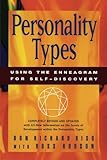
According to the personality types identified in the Enneagram which have long been held in high respect by psychiatrists, psychologists, and teachers; a person's personality (about 20% inborn, 80% learned) is the filter through which all feeling comes.
Values are learned from those around you, experiences, and teaching such as religious beliefs.
Being grateful is a result of how the personality you have uses impressions, feelings, and personal learning (such as happiness or suffering) results in your thankfulness and appreciateing how much you have.
Personality types according to the Enneagram is very interesting. It also tells why people often react to someting depending on the sum of their learning.
You might enjoy trying to see which one you are.
https://en.wikipedia.org/wiki/Enneagram_of_Personality
12-29-2016 03:54 PM
@ECBG, I never got "into" Enneagram, though I made several attempts with varying results. It seems much vaguer to me, testing-wise, than MBTI, where my Type has been rock-solid from first test to last.
It makes sense to me that "learned" traits include life experience filtered through one's innate personality (that 20%, if you will). One's life/social attitudes are largely shaped by their experiences, but two siblings, for example, can *process* those experiences very differently because the experiences are filtered through different 20%s. I think that's how/why one sibling might remember a parent as abusive and another sibling feeling differently (excluding the obvious, i.e. one child was beaten, another not).
12-29-2016 03:58 PM
@Moonchilde wrote:@ECBG, I never got "into" Enneagram, though I made several attempts with varying results. It seems much vaguer to me, testing-wise, than MBTI, where my Type has been rock-solid from first test to last.
It makes sense to me that "learned" traits include life experience filtered through one's innate personality (that 20%, if you will). One's life/social attitudes are largely shaped by their experiences, but two siblings, for example, can *process* those experiences very differently because the experiences are filtered through different 20%s. I think that's how/why one sibling might remember a parent as abusive and another sibling feeling differently (excluding the obvious, i.e. one child was beaten, another not).
@MoonchildeInteresting. If you took the test and looked at your results, unless you have someone with experience that can help you interpret your "wings", it can seem that way.
12-29-2016 04:13 PM
I find people who are NOT grateful to be some of the most 'sucessful' because - in their minds - they got where they are on their own. They have a Sociopathic way of thinking. They don't like to be encumbered.
I personally take nothing for granted. As in what has happened this year with ALL of these sudden deaths - hopefully this has been a reminder NONE of us is promised tommorrow.
12-29-2016 04:29 PM
@Cookie2025 wrote:I find people who are NOT grateful to be some of the most 'sucessful' because - in their minds - they got where they are on their own. They have a Sociopathic way of thinking. They don't like to be encumbered.
I personally take nothing for granted. As in what has happened this year with ALL of these sudden deaths - hopefully this has been a reminder NONE of us is promised tommorrow.
I get what you're saying, but there are degrees of the trait. While sociopaths undoubtedly think this way, I wouldn't consider everyone (or even most people) who have "gratefulness issues" to be sociopathic. The article aside, some of them are just degrees of thoughtless at various times in their lives (teenagers, anyone?) For some it's minor, for some passing, and for some, hard-wired or learned. It's an interesting subject, though.
12-29-2016 08:26 PM
What I read mostly on this forum are people complaining that an action they take isn't rewarded with an appropriate level of gratitude and it makes some wonder if they should quit being "so nice."
I think many problems arise because many people act only for the recognition they believe they deserve because of their action, rather than just doing something because they think it will benefit the recipient of the act. It's similar to those who make a big deal out of donating and how much and how often. I personally believe all actions should be taken without thought of receiving thanks or praise, but simply because that is why we are all here!
As for showing signs of gratitude, I agree with a previous poster here who said 80% of a person's personality is learned. My parents always said please and thank you when asking us kids to do something for them and after we responded to the request. I raised my children the same way. One of my dil's never says please or thank you to her children, and in turn, they rarely say please and thank you either. My other 2 children and their spouses also treat their children with respect and please and thank yous and even the 2 year old says thank you when someone does something nice for her when we are out.
12-29-2016 09:04 PM
I had a friend who would invite me over for Thanksgiving, several years in a row. It's common etiquette when invited to someone's home for a meal (esp a holiday/occasion meal) to bring some token something as a gift for the hostess. Whatever I brought - always inexpensive ($10-12 or less) - simple flowers, a bottle of wine, a table decoration - I was not only never thanked but my hostess acted like I'd done it just to pith her off. She was *glum* about it.
I certainly didn't bring things because I *expected* a fulsome OTT Thank You, but it eventually just plain stood out to me that this person never thanked me for anything. I found the behavior very odd from someone who was a friend. And I'm sure she wasn't from a home where no one ever said thank you.



Get sneak previews of special offers & upcoming events delivered to your inbox.
*You're signing up to receive QVC promotional email.

Find recent orders, do a return or exchange, create a Wish List & more.






Privacy StatementGeneral Terms of Use
QVC is not responsible for the availability, content, security, policies, or practices of the above referenced third-party linked sites nor liable for statements, claims, opinions, or representations contained therein. QVC's Privacy Statement does not apply to these third-party web sites.
© 1995-2026 QVC Group, Inc. All rights reserved. | QVC, Q and the Q logo are registered service marks of ER Marks, Inc. 888-345-5788
