


Stay in Touch
Get sneak previews of special offers & upcoming events delivered to your inbox.

Sign in
 Blogs & Forums
 Forums
 Blogs
Blogs

01-28-2026 02:54 AM
I made white bread a few days ago with Quick Yeast. It turned out very well, but I do remember reading some where about the difference in texture between the bread I made and Artisan bread, which may have large air holes.
I cannot remember if the change in the two textures is due to milk vs water in the recipe or type of flour used etc?
Anyone here aware of what causes this difference?
01-28-2026 03:36 AM
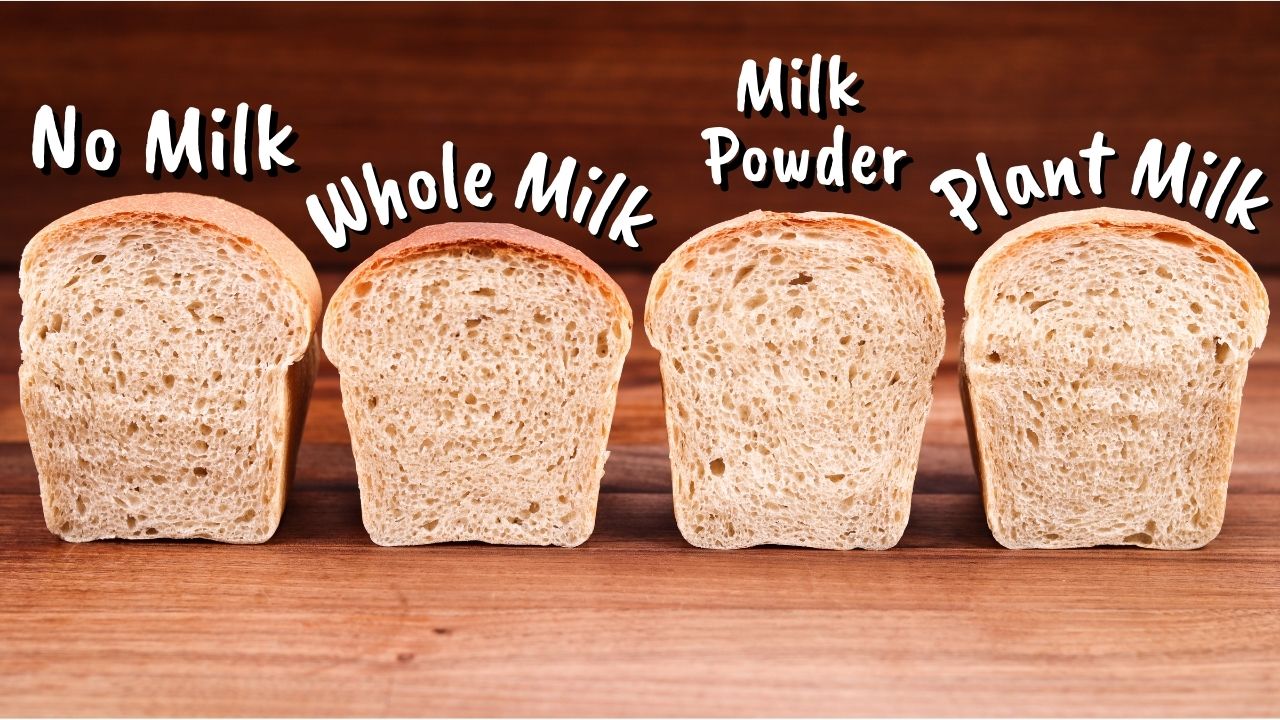
From Google:
01-28-2026 07:56 AM - edited 01-28-2026 01:47 PM
01-29-2026 02:07 AM
The picture are so interesting and I see that it does not make too much difference what kind of milk is used evcept for a bit larger loaf with no milk? Am I missing something?
01-29-2026 02:22 AM
Oh my never realized this entire body of new facts and information re: bread.
Will have to delve a bit deeper into the topic.
You are very knowledgeable about this.
Thank you for this interesting information..
01-29-2026 07:30 AM
I've been baking for over fifty years, so you pick up stuff along the way. My first time making a high-hydration dough was an Italian bread recipe that was more batter than bread dough. It was an absurdly loose dough. I kept thinking, "This can't be right." It turns out it was right. Just wildly different from what I was used to.
You kind of have to turn off your commonsense when working with high hyrdration doughs and trust the process. "A wet board? Won't that make the already wet dough wetter? And wet hands?" Yeah. It works though.
I highly recommend watching lots of videos on high hydration doughs before you try it yourself. It's a completely different way to make bread. But if you want bread with big holes, you need the hydration.
01-29-2026 10:50 PM
My mom would always scold me if she bit into a loaf with large air holes. "This bread has big holes! What's wrong with it? You still haven't learned how to make bread properly, have you?"
My husband would counter her, "If the holes bother you, then don't eat them!"

01-30-2026 03:43 AM
I think part of my attraction to making bread is using the yeast. I never really know what I will find after the baking.
I am always on the search for new bread or pizza dough recipes.
I have had some very good results and some disasters. Very few have ever been tossed in the garbage though.
I always wait in anticipation to see what is going to show up after I remove it from the oven.
I have ruined some doughs because I did not trust the amount of liquids or flour used. Then on the other hand, they turned out pretty good.
I also want to stay somewhat aware of the humidity here.Oh, and the temperature.
That's quite a few variables just to keep it all interesting.
I use the microwave to keep things warm i.e. the towel I use to cover the freshly mixed dough, warm to hot water to warm the bowl that will be holding the dough.
I live in a damp area with temps usually cooler than other places near by.
So on and on it goes.
I think of it all as a secondary hobby.
01-30-2026 03:45 AM
Oh, it sounds as if you were making Artisan Bread. Mucho expensive too!
No more home made bread for her...lol
01-30-2026 03:51 AM
@Flatbush wrote:Oh, it sounds as if you were making Artisan Bread. Mucho expensive too!
No more home made bread for her...lol
That's it! Artisan! Yeah!
I make no-knead bread. The dough is very moist so it steams inside the dutch oven, creating a crisp crust.
I think my mom was accustomed to the bread that her mother made. She claimed she made 5 or more loaves every morning before work, because she had a large family and it was the Great Depression.
My mom however never learned to bake bread, only complain. It was her daughter who took up the family bread-baking mantle.



Get sneak previews of special offers & upcoming events delivered to your inbox.
*You're signing up to receive QVC promotional email.

Find recent orders, do a return or exchange, create a Wish List & more.





Privacy StatementGeneral Terms of Use
QVC is not responsible for the availability, content, security, policies, or practices of the above referenced third-party linked sites nor liable for statements, claims, opinions, or representations contained therein. QVC's Privacy Statement does not apply to these third-party web sites.
© 1995-2026 QVC, Inc. All rights reserved. | QVC, Q and the Q logo are registered service marks of ER Marks, Inc. 888-345-5788
